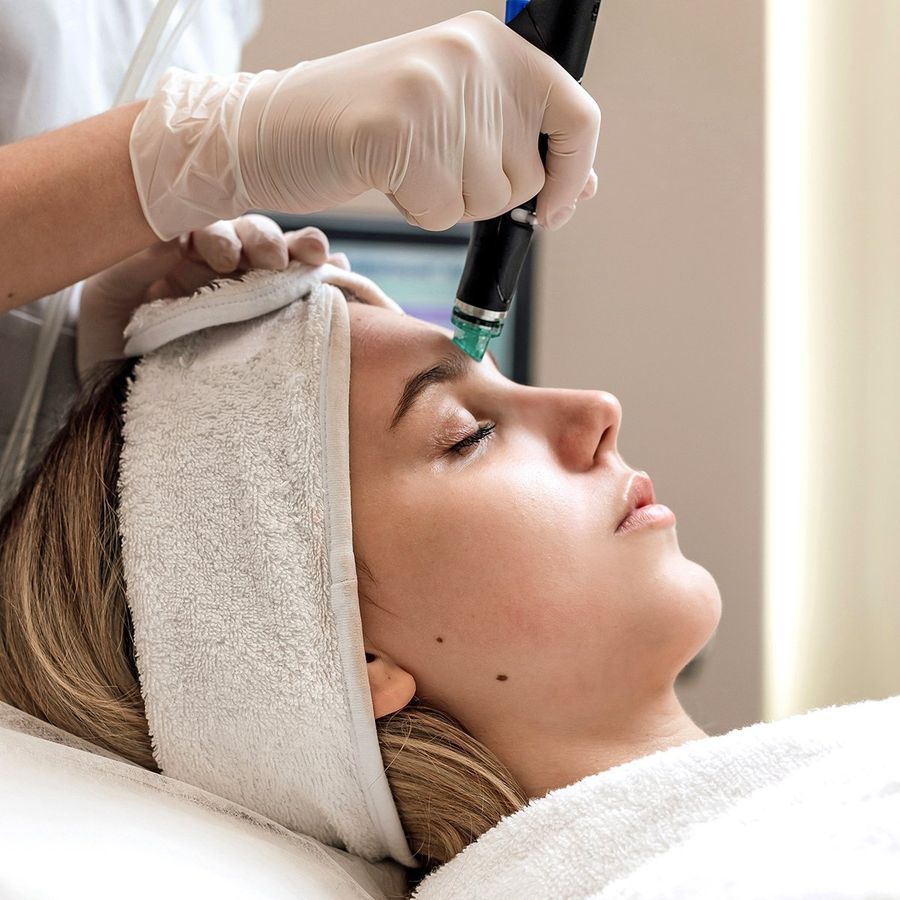
Medical filler dissolving is a short, fast-acting treatment used to reverse mostly hyaluronic acid (HA)-based fillers. The basic principle is that an enzyme called hyaluronidase is injected beneath the skin, breaks down the hyaluronic acid chains and helps the body clear these fragments through natural pathways. In this way, unwanted volume, asymmetry or complications can be corrected within a short time. The procedure is planned in a controlled manner, with proper patient selection, appropriate technique and sterile conditions; possible side effects are explained below.
In Which Situations May Filler Dissolving Be Needed?
The goal of filler treatment is always a result that is natural, balanced and in harmony with the facial proportions. However, in some situations filler dissolving may be needed:
- Excess fullness or unsuitable volume: An exaggerated look in areas such as the lips, cheeks or jawline.
- Asymmetry: A noticeable difference in volume or a distortion of shape between the two sides.
- Tissue irregularity / lumpiness: A wavy appearance in thin-skinned areas such as the under-eye or the nasolabial fold.
- Side effects or complications: Bruising, prolonged swelling, discomfort due to pressure; rarely, suspected vascular occlusion (an emergency indication).
- Change in aesthetic expectations: The person is unhappy with their appearance or wants to return to a more natural result.
Note: Hyaluronidase dissolves only hyaluronic acid based fillers. Non-HA permanent or semi-permanent fillers such as calcium hydroxylapatite, PLLA (polylactic acid) or PMMA are not dissolved by hyaluronidase.
How Is the Procedure Performed? (Step by Step)
- Assessment and planning: The area, the type and depth of the filler and its spread are determined by examination. When necessary, the location can be identified under ultrasound guidance.
- Allergy screening and test dose: Hyaluronidase can rarely cause an allergy. Caution is needed in people who have previously had an allergy to bee venom / hyaluronidase; when appropriate, a small test dose may be tried.
- Anesthesia and preparation: The area is cleaned with an antiseptic. Comfort is increased with a local anesthetic cream or a cold compress.
- Injection: Hyaluronidase at the appropriate concentration is injected into the target area with a very fine needle or cannula. If considered necessary, even distribution is achieved with a multiple micro-injection technique.
- Shaping and spreading: Light massage helps the enzyme spread along the filler (the massage protocol differs when a vascular problem is suspected).
- Observation: After the procedure, there is a short period of observation at the clinic; the patient is given information and discharged.
Duration: Usually 10–15 minutes. Onset of effect: noticeable within hours; clear dissolving is seen within a few days. Repeat treatment: with widespread or dense filler, additional sessions may be needed.
How It Works in Brief
Hyaluronidase breaks the long chains of hyaluronic acid into pieces. As the chains shorten, the gel structure is lost, water retention in the tissue decreases and the filler quickly loses its volume. The body clears these fragments through the lymphatic system and metabolic pathways. The result is a flatter, softer and more natural tissue contour.
Advantages
- Fast, targeted correction: Unwanted volume and asymmetry can be corrected in a short time.
- Control and reversibility: With hyaluronic acid fillers, it offers the possibility of a planned aesthetic revision.
- Complication management: It is used as part of emergency intervention when vascular compression or blockage is suspected.
- Short procedure time and a quick return to social life.
Frequently Asked Questions
Is the effect permanent? Yes. HA filler in the treated area can dissolve completely. However, the tissue's own natural volume is preserved. If desired, there is no objection to having filler again later (generally after a few weeks).
Does it dissolve completely in a single session? In many cases a single session may be enough; however, for high-density, cross-linked fillers or fillers spread over a wide area, more than one session may be planned.
Is it painful? Generally minimal. Comfort is provided with a local anesthetic cream or injection and cold application.
Will the face sag if the filler dissolves completely? Hyaluronidase targets the filler material; its effect on natural tissues is limited. Excessive use of the enzyme is avoided; the natural structure is preserved with the principle of dose titration.
When can I have filler again? It is generally recommended to wait 2–4 weeks to let the tissue rest. During this time swelling subsides and tissue balance settles, allowing a more accurate new plan.
Risks and Possible Side Effects
- Redness, mild swelling, bruising: Generally decreases on its own within 24–72 hours.
- Temporary unevenness/asymmetry: Temporary appearances due to the spread of the enzyme; corrected at a follow-up session.
- Allergic reaction (rare): Itching, rash, swelling. In people with a history of allergy, testing and emergency preparedness are essential.
- Unwanted volume loss in a neighboring area: To reduce the risk of excessive diffusion, low-to-medium dose, multiple-point, layer-controlled injection is preferred.
- Temporary tenderness: May be expected in the first 24–48 hours.
With appropriate technique, the right dose and an experienced practitioner, these risks are reduced to a minimum.
Aftercare Recommendations
- For the first 24 hours, do not press on or massage the area with a shearing motion, unless your doctor tells you otherwise.
- Avoid excessive heat (sauna, steam bath) and strenuous exercise for 48 hours.
- To reduce swelling, a cold compress can be applied at short intervals.
- If needed, a topical product or oral supplements recommended by the doctor can be used.
- Come to the follow-up appointment within 3–7 days; if needed, a fine-tuning session is planned.
Who Is It Not Suitable For?
- People with a known history of allergy to the relevant enzymes, especially hyaluronidase / bee venom
- Treatment areas with an active infection
- During pregnancy and breastfeeding (not routinely recommended; requires a benefit-risk assessment)
- Permanent/semi-permanent filler materials other than HA (the enzyme has no effect on them)
Summary
Medical filler dissolving (hyaluronidase injection) is a short, controlled procedure used to reverse hyaluronic acid fillers. When excess volume, asymmetry or a complication develops, it may help restore aesthetic balance; the dose and technique are adjusted gradually in order to protect natural tissues. Most cases are completed in 10–15 minutes; the effect begins within hours and becomes more apparent within a few days. When needed, the aim is to approach the desired appearance through a gradual approach and follow-up sessions.