Botox for migraine is a treatment option that may help reduce the frequency and severity of attacks in patients who have been diagnosed with chronic migraine and are considered suitable. Migraine is a neurological disease that typically involves throbbing pain on one side of the head, sensitivity to light and sound, nausea and vomiting, and that seriously affects quality of life. In some patients these attacks occur a few times a month, but in people with chronic migraine they can become almost constant.
Medication, lifestyle changes or alternative methods do not always give sufficient results. In this case, following a neurology evaluation, Botox for migraine may be considered as one of the options.
How Does Botox for Migraine Work?
Botulinum toxin (Botox) is a protein that temporarily blocks communication between muscle and nerve. When used in migraine treatment, it prevents excessive contraction of the muscles around the head and neck. It also targets the mechanism by which migraine attacks arise, by reducing the transmission of pain signals to the brain.
In this way, both muscle-related tension is eased and the nerve signals that trigger a migraine attack are suppressed. As a result, in some patients the frequency and severity of attacks may decrease; the response varies from person to person.
Clinical studies in chronic migraine report that a reduction in the number of headache days may be seen in suitable patients; the response varies from person to person. In some patients, this may contribute to reduced use of pain relievers.
Who Is It Applied To?
Botox for migraine is suitable for patients who have been diagnosed with chronic migraine and do not respond adequately to medication. Before deciding on the treatment, the patient needs to be assessed by a neurology specialist.
In general, following a neurology evaluation, Botox for migraine may be considered in patients with the following characteristics:
- Those who have headaches on more than 15 days a month,
- Of which at least 8 are migraine-type headaches,
- Those who have had headaches at this frequency for at least 3 months or longer,
- Those who do not get an adequate response despite medication,
- Patients whose painkiller use is increasing or who experience medication side effects.
Botox for migraine can be applied to both women and men. Before the treatment, the patient's medical history, type of migraine and trigger factors are assessed in detail.
How It Is Applied
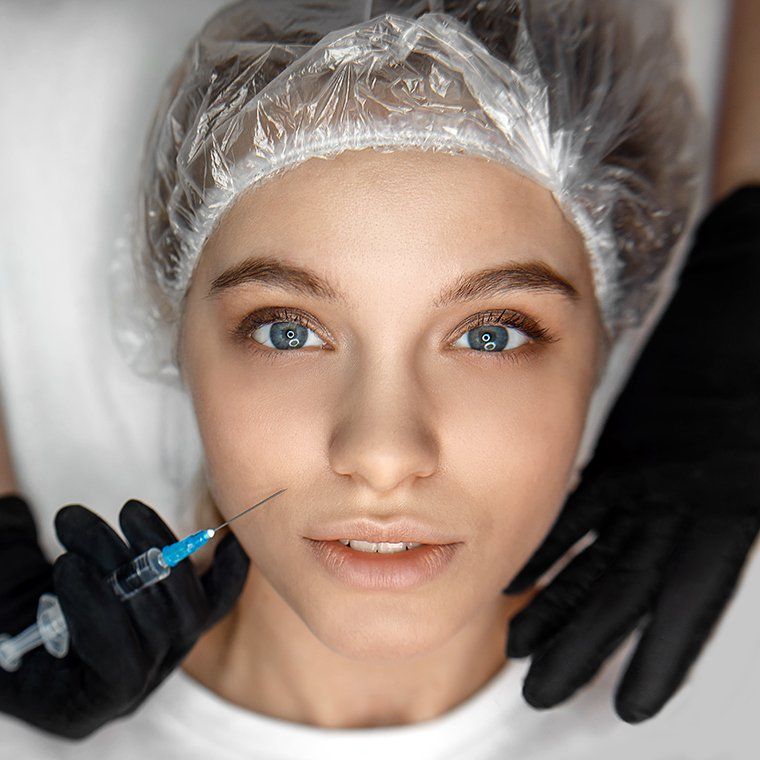
The Botox treatment for migraine is a short and comfortable procedure. Using fine-tipped needles, many small doses of Botox are injected into specific muscle groups in the head, neck and shoulder area.
The treatment areas generally include the following:
- Forehead
- Temples
- Back of the neck
- Neck
- Around the shoulders
These are the areas where migraine pain most often starts and spreads.
The procedure takes about 15–20 minutes on average, and because a local anesthetic cream is applied, pain is minimal. After the procedure, patients can return to daily life immediately. It generally does not require a long recovery period; post-procedure recommendations are given by the physician.
The effect of Botox generally begins to be felt within 2–3 weeks. During this period, a reduction in the frequency and severity of attacks becomes noticeable. The full effect settles within 1 month, and results continue for 3–6 months on average. The response to treatments performed at regular intervals varies from person to person and is monitored by the physician.
Benefits of Botox for Migraine
When a reduction in attack frequency is achieved, this may also be reflected positively in the person's daily life.
1. Reduces Migraine Attacks
Botox may help reduce the frequency and duration of migraine attacks. Some patients report a decrease in the number of attacks per month. In this way, the number of pain-free days increases.
2. Reduces the Need for Painkillers
In patients with chronic migraine, frequent use of pain relievers can negatively affect stomach, liver and kidney health. When attacks decrease, the frequency of pain reliever use may also decrease. This may contribute to a lower risk of side effects related to pain relievers.
3. Improves Quality of Life
People who live with constant migraine pain often face problems such as reduced work performance, sleep disturbance, anxiety and depression. Botox for migraine may contribute to longer pain-free periods in some patients and thereby positively affect daily life.
Points to Note After Treatment
The points to note after Botox for migraine are quite simple:
- For the first few hours after the treatment, do not massage the head and do not touch the injection areas.
- For the first 24 hours, avoid activities such as heavy exercise, saunas, steam baths and hot showers.
- A mild headache or a feeling of tension may occur for a few days after the procedure; if any unexpected complaint arises, you should contact the physician.
To achieve effective and safe results, it is important that the treatment is performed by a physician experienced in migraine treatment.
How Long Does the Effect of Botox for Migraine Last?
Although the effect of Botox varies from person to person, it lasts on average 3 to 6 months. With sessions repeated at regular intervals, the duration of the effect may become longer; the response varies from person to person. In some patients, a more noticeable reduction in attack frequency may be seen with repeated treatments; this varies from person to person. When treatment is stopped, the effects slowly fade; whether to continue the treatment is decided by the physician.
Conclusion
Botox for migraine is a treatment option that may help reduce pain frequency and severity in suitable patients diagnosed with chronic migraine; suitability is determined through neurology evaluation. This method, which does not require surgery and is performed in a short time, may contribute to a reduced need for pain relievers and a lighter attack burden in some patients. For people who have struggled with migraine attacks for a long time and have not gained sufficient benefit from medication, Botox is one of the options that may be considered following neurology evaluation.